SK
Shyam Kumar
Founder & CEO, CloudNuro.ai
Building CloudNuro’s SaaS & AI governance platform — recognized by Gartner, Info-Tech, and Everest Group.
AI is no longer an innovation challenge. It is a governance challenge. As enterprises deploy hundreds of models, copilots, agents, and SaaS applications, the question is no longer whether AI delivers value — but whether you can govern it responsibly, securely, and profitably. This executive summit examines the operating principles that separate real transformation from expensive experimentation.
The recognition executive teams trust
 SaaS Management Platform, 2024 & 2025
 SaaS Management Platform, 2024 & 2025
 FinOps Peak Matrix® Recognized, 2025
.svg) Chicago Innovation Awards, 2025
Chicago Innovation Awards, 2025 Gartner Peer Insights · 4.9 / 5
 G2 · 4.8 / 5
 Google Cloud Technology Partner
 FinOps Foundation Member
88% of organizations now use AI. Only 36% can govern it. That gap between adoption and control is where enterprise value leaks — through five recurring governance failures. The principle underneath all of them is simple: you cannot govern what you cannot see.
Enterprises rarely fail because they lack AI. They fail because AI expands faster than governance. Shadow AI spreads. Model and SaaS spend turn invisible. Agents gain access without oversight. Compliance loses line of sight, FinOps can’t attribute cost, and security discovers risk only after deployment.
CloudNuro’s position is direct: governance — not adoption — is now the defining challenge of enterprise AI.
Organizations are moving beyond pilots into enterprise-wide deployment. Agents are beginning to make operational decisions. Foundation-model costs keep rising, regulatory expectations are accelerating, and boards are asking harder questions about AI accountability. The organizations that establish governance today will outperform those still chasing adoption tomorrow.
Only 39% of adopters see enterprise-level financial impact. Every quarter without a governance and FinOps model widens the distance to the leaders.
As agents begin to act autonomously, cost, attack surface, and governance failures multiply. Gartner expects over 40% of agentic-AI projects to be canceled by 2027.
Worker trust in company-provided generative AI fell 31% in a single quarter. Adoption is won through change management and culture, not tool mandates.
EU AI Act enforcement, SEC disclosure expectations, and sector frameworks are now real. Ungoverned AI is a compliance liability, not just an operational one.
Boards now ask for AI ROI attribution, not AI roadmaps. The era of buying time with strategy decks and pilot announcements is closing.
Foundation-model and token costs continue to climb. Without financial governance, AI spend scales faster than the value it is meant to create.
Governance is becoming the operating system of enterprise AI.
Each decision maps to one of the five governance failures and is grounded in cited research and practitioner experience — not vendor decks. Select a decision to explore it.
95% of enterprise GenAI pilots show no measurable P&L return — and only 39% of adopters see enterprise EBIT impact.
MIT NANDA, 2025 · McKinsey, 2025
Individual productivity gains are real, but they are not compounding into enterprise ROI — and most leadership teams have never asked why. This decision names the patterns that separate transformers from laggards, and how to give boards an honest, measurable answer before they ask for one.
Escalating, unpredictable cost is a leading reason Gartner expects 40%+ of agentic-AI projects to be canceled by 2027.
Gartner, 2025
Consumption pricing created a new class of runaway spend: no token governance, no unit economics, no ROI attribution — and agentic AI multiplies the unpredictability. Most finance teams reconcile invoices instead of governing a consumption model. This decision establishes who owns AI cost, and how to operationalize a FinOps model for AI.
80%+ of employees use unapproved AI tools, and 20% of organizations have already been breached through shadow AI.
UpGuard, 2025 · IBM, Cost of a Data Breach 2025
Shadow AI is not a future risk — it is an active condition in virtually every enterprise, and most organizations couldn’t pull the plug on a rogue agent if they had to. This decision defines ownership and moves past handbrake governance toward an architecture for speed with guardrails.
Worker trust in company-provided generative AI fell 31% in a single quarter — and nearly half of CEOs say staff resist AI.
Harvard Business Review, 2025 · HR Dive, 2025
The tools are ready; the people are not — and no model fixes a culture gap. The organizations winning adoption aren’t winning with better technology. They win with deliberate change management, psychological safety, and a workforce architecture built for transformation at scale.
42% of companies abandoned most AI initiatives before production — while vendor-built solutions succeed about 2× more often than internal builds.
S&P Global, 2025 · MIT NANDA, 2025
The gap between a successful pilot and scalable production isn’t a model problem — it is structural. The organizations that crack it share a handful of traits, and none of them are about technology. This closing decision walks through a practitioner-built 90-day plan and the operating model that survives the next five years.
13 August 2026 · 11:00 AM–3:00 PM EST. Times are Eastern and subject to change.
Every decision is framed for the executive team, not the engineering team. No technical background required. You’ll join 100+ enterprise leaders governing AI at real scale.
An executive council spanning technology, finance, security, procurement, and digital transformation — leaders who have governed AI inside real organizations, bringing practitioner experience, not consulting theory.
Founder & CEO, CloudNuro.ai
Building CloudNuro’s SaaS & AI governance platform — recognized by Gartner, Info-Tech, and Everest Group.

Co-Founder & Chief Product Officer, CloudNuro.ai
Leads product for CloudNuro’s AI FinOps and real-time governance platform.
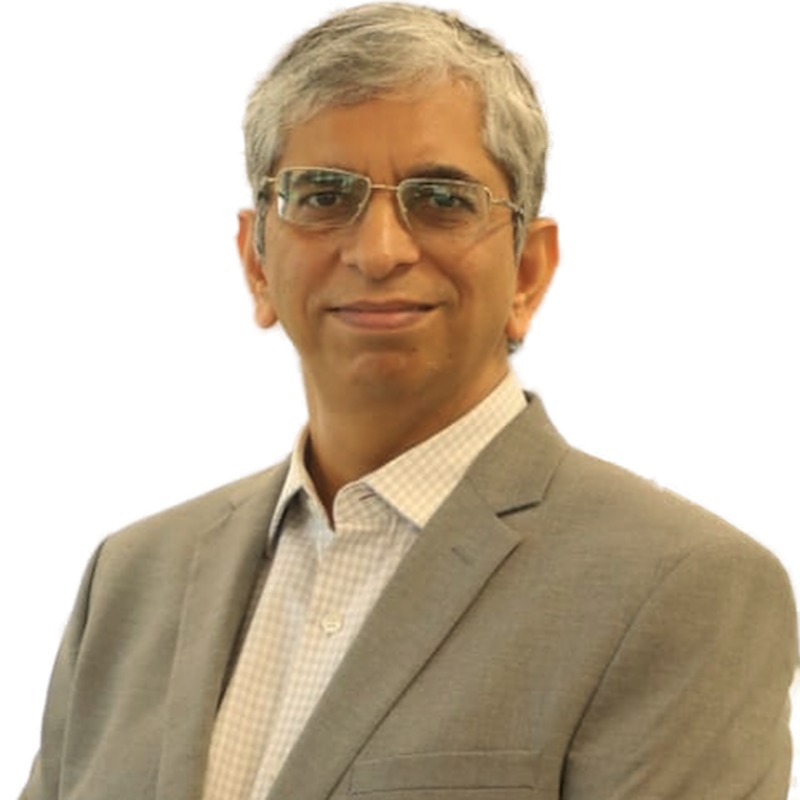
Chief Data Scientist, AI/ML CoE, Jio · Dean, Jio Institute
Led AI/ML initiatives across Google, Yahoo!, and FICO · PhD, UT Austin.

Chief Data Scientist & VP, AI/ML Center of Excellence, Jio
Drives speech, multimodal, and agentic AI at Jio · M.Tech, IIT Kanpur.

Founder, Chairman & CEO, Sunera Group
Enterprise-technology founder and Venture Partner at Pavestone VC.
More council members to be announced. Additional enterprise leaders are joining the stage.
Every attendee leaves with the frameworks to govern AI: blueprints, checklists, and scorecards you can operationalize the week after the summit.
A reference architecture to standardize how AI is governed across models, agents, and SaaS — and give leadership a shared language for the five governance failures.
Define who governs AI, who owns spend, and how decisions are made — the operating model that scales past pilots and survives to 2030.
Attribute every dollar of token and model spend to a business outcome, and operationalize FinOps for AI — built for CIOs and CFOs, not just invoices.
Measure adoption, ROI, risk, and governance maturity on one board-ready page — so you can answer the questions boards are already asking.
Institutionalize acceptable-use, access, and compliance controls for shadow AI and agents — governance that enables speed instead of blocking it.
A practitioner-built plan to move from experimentation to governed, enterprise-wide deployment — from teams that have done it, not consulting projections.
CloudNuro’s point of view is simple: the next generation of enterprise advantage will come from governing AI — not simply deploying it. Governance is becoming the operating system of enterprise AI.
— CloudNuro
A free, virtual, panel-led executive summit on 13 August 2026 (11:00 AM–3:00 PM EST). Across five decisions it addresses the governance challenge behind enterprise AI — measuring ROI, owning AI spend, governing shadow AI, winning human adoption, and choosing an operating model that scales — each framed for the executive team and backed by cited research.
Leaders accountable for AI outcomes: CIOs, CTOs, Chief Data Officers, CISOs, CFOs, Heads of AI, enterprise architects, and transformation leaders. No technical background required — every session is framed as a leadership decision, not an engineering problem.
It is not a hands-on technical workshop or a coding deep-dive. If you’re looking for model-tuning tutorials rather than the governance, economics, and adoption decisions behind scaling AI, this summit is likely not the right fit.
Yes — completely free to attend. Register once and you’ll receive instant confirmation, a calendar invite, session recordings, and the post-summit operating assets at no cost. Seats are limited.
Four hours: 11:00 AM to 3:00 PM EST, including a networking break and a live executive roundtable. See the full agenda above.
Yes. Registered attendees receive access to all session recordings after the event, along with the operating assets — the governance blueprint, operating-model framework, financial-governance checklist, executive scorecard, policy framework, and 90-day plan — to put to work or share with your team.
Yes. Live Q&A is woven throughout, a dedicated networking break connects you with peers and the council, and the closing executive roundtable is built entirely around audience questions. This is a conversation, not a broadcast.
Absolutely — each attendee should register individually so everyone receives their own confirmation, calendar invite, and operating assets. Many leadership teams attend together.
Free to attend, virtual, and built for decision-makers. Confirmation and calendar invite land in your inbox instantly — and seats are limited. The leaders who navigate 2027 with confidence are the ones governing AI in 2026.
Free · Virtual · Instant confirmation to your inbox.
Your details are secure · No spam, ever
Statistics are drawn from the published research above and presented for discussion during the summit. Figures reflect the cited reports at time of publication.